
You did reply to the Gurubuckaroo comment, just a few interjections managed to find their way in first. Does mess up smartarsed replies occasionally, shame when it’s a particularly funny one. On busy articles, I often find posts popping up between pressing “reply” and “post comment”.
If you had a mains-voltage shock once and got away with it, you were lucky, that doesn’t mean the voltage is safe, you were merely playing a game of Russian Roulette with Ohm’s Law and a low impedance high voltage supply. Your domestic mains can dump the hefty amounts of current your home heating, your cooker, or your electric kettle demands, so if it finds a low resistance path through you then it is going have no problems dumping whatever current Ohm’s Law allows it to through that path. The chances are if it happens to you the path will be a high enough resistance that you’ll only get a very nasty jolt and live to tell the tale, but if it’s not your lucky day the resistance will be low enough that you’re just going to sit on the end of it twitching until the power is turned off, whether you’re alive or not. That’s the gruesome truth. Mess with this stuff and you can die, end of story. You are responsible for keeping yourself safe, and this is not a joke. OK? Now to work!
When I’m doing electrical work, I *always* short the conductors to verify no power (after flipping the breaker and testing with a meter). Better safe than sorry.
PS I understand L1 will work for many people (up to maybe 40 miles per day driving), I disagree that it should be encouraged due to safety concerns and most general people won’t properly care for the L1 charger.
DC burns. It doesn’t cause a muscle lock-up like AC does. It’s more dangerous in that sense, because you don’t feel it beyond the initial shock until your flesh starts to cook from inside out.
Oh, and I have fixed about 15,000 of the old CRT TV’s so while my mistakes can’t ever be called good, they’re not without precedent.
Retired engineer, 71 years young. Computer builder and programmer. Linguist specialising in language acquisition and computational linguistics. Interested…
You likely encountered a shared neutral between more than one circuit. You have to switch off the breakers for all the circuits that share the neutral.
Why do the US still use 110v mains and 20A room circuit breakers? Those currents are dangerous, not the volts.
If you look at the Fotek datasheet for that relay, you’ll find that the specified heatsink does not resemble a piece of galvanized steel sheet metal, horizontally mounted with a half inch air gap under it, and set on top of a heater.
One of the best ways to show your appreciation is telling your family and friends about me. My business thrives on word-of-mouth recommendations.
Still can’t bring myself to install SSRs on “high current” applications, either. High quality mechanical relays.
Bitcoin Futures Deliver Wild Ride as Debut Brings Rally, Halts | Lrd12 Overload Relay Related Video:
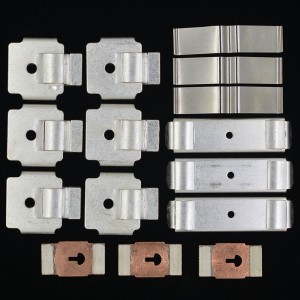
Our eternal pursuits are the attitude of "regard the market, regard the custom, regard the science" as well as theory of "quality the basic, have faith in the initial and administration the advanced" for La1dn11 Contactor Auxiliary Contact , Electrical Relay Contactor , La5f500803 Tesys F Main Contact , We can give our clients absolute advantages in product quality and cost control, and we have full range of molds from up to one hundred of factories. As product updating fast, we succeed in developing many high quality products for our clients and get high reputation.